5 Signs Your Dog Is Over Threshold (And Why Training Isn't Working in That Moment)
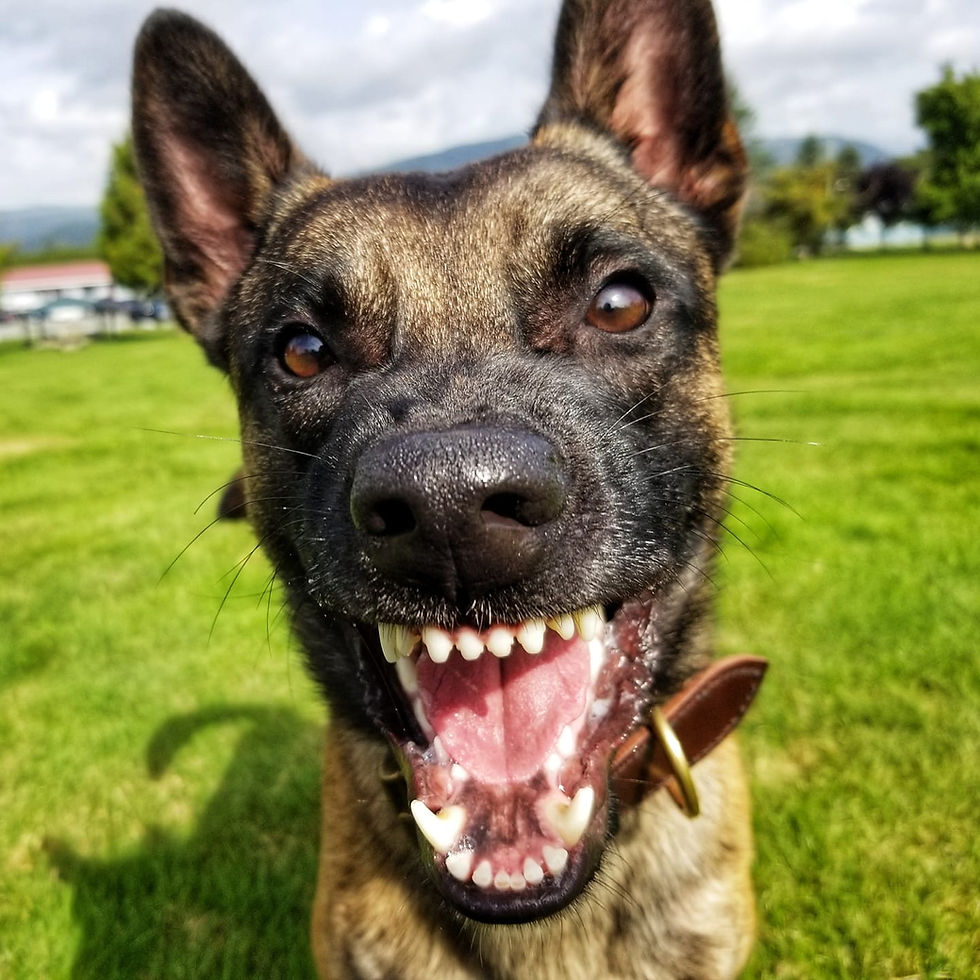
Have you ever been out on a walk when your dog suddenly seems to forget everything they've ever learned?
Their name means nothing.
They won't take treats.
They ignore cues they know well.
Then, before you know it, they're barking and lunging at another dog, person, or passing vehicle.
It's easy to think they're being stubborn or choosing to ignore you.
More often than not, that's not what's happening.
Your dog has simply gone over threshold.
What Does "Over Threshold" Mean?
In dog training, a threshold is the point where your dog becomes so emotionally aroused that they're no longer able to think clearly or learn effectively.
That emotion could be excitement, fear, frustration, anxiety, or even a combination of several feelings.
When a dog goes over threshold, their brain shifts into survival mode. Instead of processing information and making thoughtful decisions, they're simply reacting to what's happening around them.
This is why training often feels impossible in those moments.
The good news is that dogs rarely go from perfectly calm to barking and lunging without giving us any warning.
If we know what to look for, we can often recognize the early signs and help our dogs before they reach that point.
1. They Stop Taking Food
One of the first things I watch for is whether a dog is still interested in food.
If your dog normally loves treats but suddenly refuses them, that's valuable information.
It doesn't necessarily mean they aren't hungry.
It often means the environment has become too overwhelming for them to think about eating.
2. They Can't Look Away
Has your dog ever locked onto another dog or person and seemed unable to disengage?
They're staring.
Their body becomes still.
You call their name, but they remain focused on the trigger.
Fixation is one of the clearest signs that your dog is approaching their threshold.
The longer they remain locked on, the more difficult it becomes for them to regulate their emotions.
3. They're Pulling Hard Towards Something
Many owners assume pulling means their dog is simply excited.
Sometimes that's true.
But increased leash tension can also be a sign of stress, frustration, or anxiety.
Pay attention to changes in your dog's body language.
If the leash suddenly becomes tight, your dog's body stiffens, or they begin leaning toward the trigger, they could be getting ready to react.
4. They Stop Responding to Cues
Your dog knows their name.
They know "sit."
They know "touch."
So why are they suddenly ignoring you?
They're probably not.
Once a dog is approaching or over threshold, responding to familiar cues becomes much more difficult.
It's not a lack of training.
It's a sign that they're struggling to process information.
5. They Bark, Lunge, or Explode
This is the behaviour most people notice.
But it's actually the last step in the sequence.
By the time your dog is barking and lunging, they've usually been telling us for several seconds, or even minutes, that they were becoming overwhelmed.
Our goal isn't simply to stop the reaction.
Our goal is to notice the earlier signs so we can support our dogs before they feel the need to react.
It's Not About Controlling Your Dog
Many reactive dog owners feel like they need to become better at controlling their dog.
I see it differently.
I want owners to become better at reading their dog.
When we recognize those early signs of stress, frustration, or anxiety, we can create distance, redirect attention, or simply give our dogs the space they need to succeed.
That changes the entire training experience for both ends of the leash.
Need Help With a Reactive Dog?
If walks feel stressful, unpredictable, or exhausting, you're not alone.
The Reactivity Recovery System is Ideal Canine's step-by-step program designed to help dogs build confidence, improve emotional regulation, and navigate the world with greater success.
Instead of simply managing reactions, we focus on understanding why they happen and giving both dogs and owners the skills they need to move forward together.
If you're in Mission or Abbotsford, I'd love to help you and your dog enjoy calmer, more confident walks.
Ready to get started? Reach out to learn more about the Reactivity Recovery System or book your first session today.


Comments